
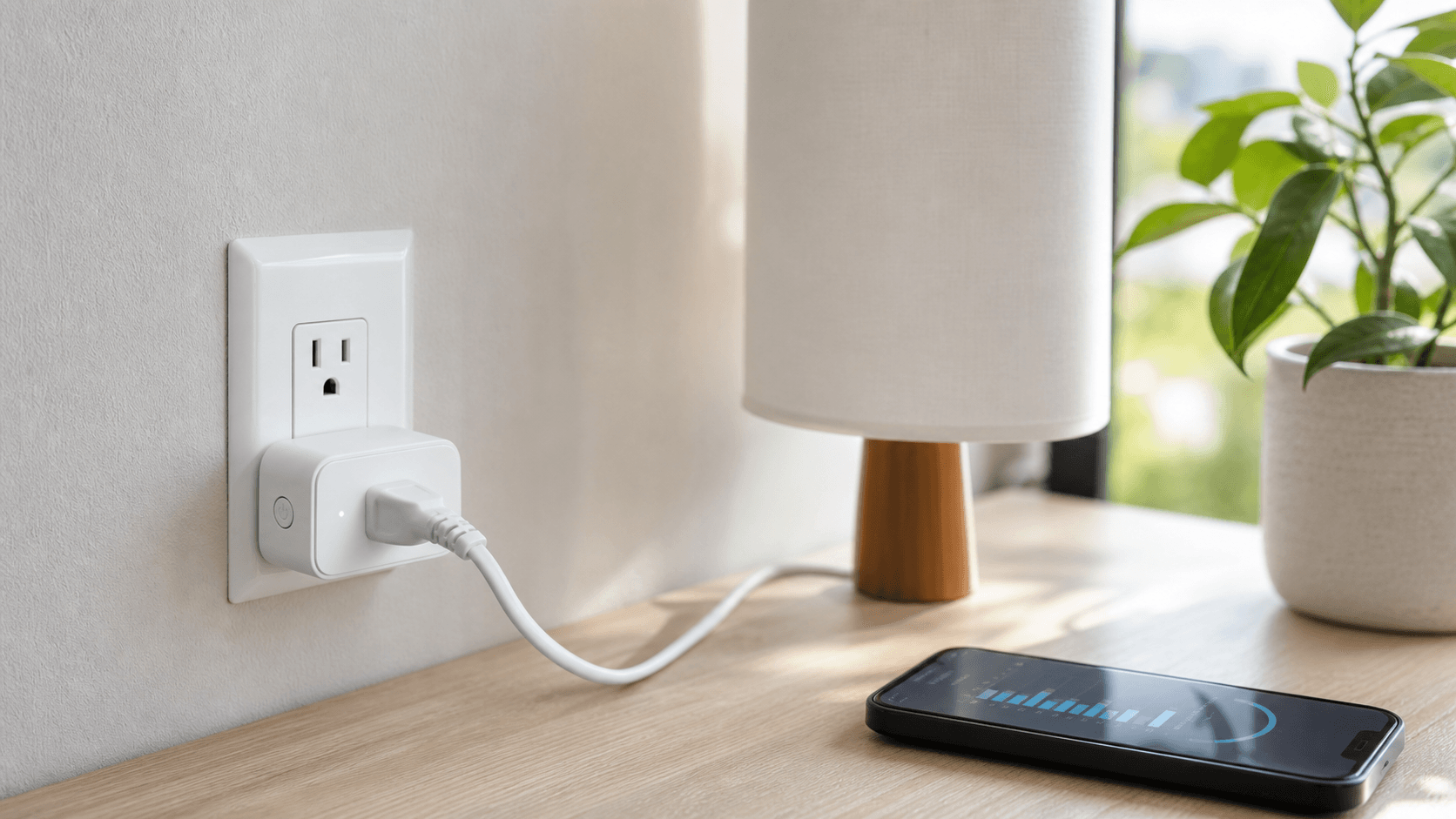
Energy monitoring is the useful part
A basic smart plug can turn a device on and off. An energy-monitoring smart plug also shows how much electricity the connected appliance uses. That makes it useful for heaters, dehumidifiers, office setups, old fridges, aquarium gear and standby devices.
Check the maximum load
Most European smart plugs are rated around 10A or 16A. For higher-power appliances, choose a 16A model and still check the exact watt rating. Do not use a small smart plug for devices that exceed its limit.
For a quick market check, you can also Compare energy-monitoring smart plugs on Amazon before reviewing the shortlist below.
Wi-Fi, Zigbee or Matter
Wi-Fi plugs are simple and work without a hub. Zigbee plugs are good if you already use a compatible hub or Home Assistant. Matter can make compatibility easier across ecosystems, but app quality and energy reporting still vary by brand.
Automation should stay simple
Good uses include switching off standby devices, measuring a dehumidifier, scheduling lights, or checking how much a home office consumes. Avoid critical appliances where an accidental off command would be a problem.
Our quick advice
For a first plug, choose a 16A model with energy monitoring and a reliable app. If you already run a smart home hub, compare Zigbee or Matter versions for better integration.
Quick answers
Do all smart plugs measure consumption?
No. Check for energy monitoring, power metering or consumption tracking.
Is 16A necessary?
It is safer for many home appliances, but always check the device wattage and plug rating.
Can I use a smart plug outside?
Only if it is clearly rated for outdoor use, with an appropriate IP rating.
Related buying tools
Continue with the most relevant calculator or guide.
HomeSpecLab works best when calculators, buying guides and product picks reinforce each other. Use these links to move from sizing to shopping criteria.